


Storing Your Harris Pontoon in Winter
The information provided is for general informational purposes only. This information is based on the author’s personal experience and does not constitute financial or legal advice. You should consult with a professional and/or conduct your own independent research to verify any information in this post prior to making a financial decision or otherwise.
When the leaves start changing color, for boaters up north that means winter isn’t far off and it’s time to think about winterizing your Harris. If done right, when it’s time to recommission your boat in spring, it will be a drama-free experience.
Remove Everything
Follow the if-it-isn’t-nailed-down-remove-it rule. Remove life jackets, skis, tubes, ski ropes, dock lines, suntan lotion, bottles of motor oil, towels, gimble-mounted electronics, charging cables, and tools.
Items like ski equipment, life jackets and lines should be inspected and given a light cleaning before storing in a dry location for the winter.
Clean Your Boat Thoroughly
If your pontoon has been in the water for the season, the first step is to attack any accumulation on the waterline and below. If left to dry first, the scum line on logs can be very difficult to remove.
- Wash it with a mild detergent mixed with warm water and worked with a stiff-bristled brush followed by a rinse with a hose.
- Use a mixture of 50 percent white vinegar and distilled water and spray it on and leave it for 30 seconds before wiping it with a rag.
- If the above fails, use Napa Aluminum Brightener, which is a spray-on, rinse-off product.
For vinyl seats, use Meguiar’s M5716SP Marine/RV Vinyl & Rubber Cleaner & Protectant, which helps keep the upholstery supple throughout the cold winter. Just spray it on a soft rag and wipe the seats down.
Pontoon fencing can be cleaned with mild soap and water worked with a soft-bristled brush followed by a spray down with a hose. Avoid using a power washer.
Winterize Your Mercury Outboard and Fuel
- Change all fluids like engine oil (don’t forget the filter) and lower unit gear oil.
- Treat the fuel. First, add a fuel stabilizer like Mercury Quickstor then fill the tank 95 percent full using ethanol-free gas.
- Fog the engine per your specific model’s owner’s manual.
Shrink Wrap Your Boat
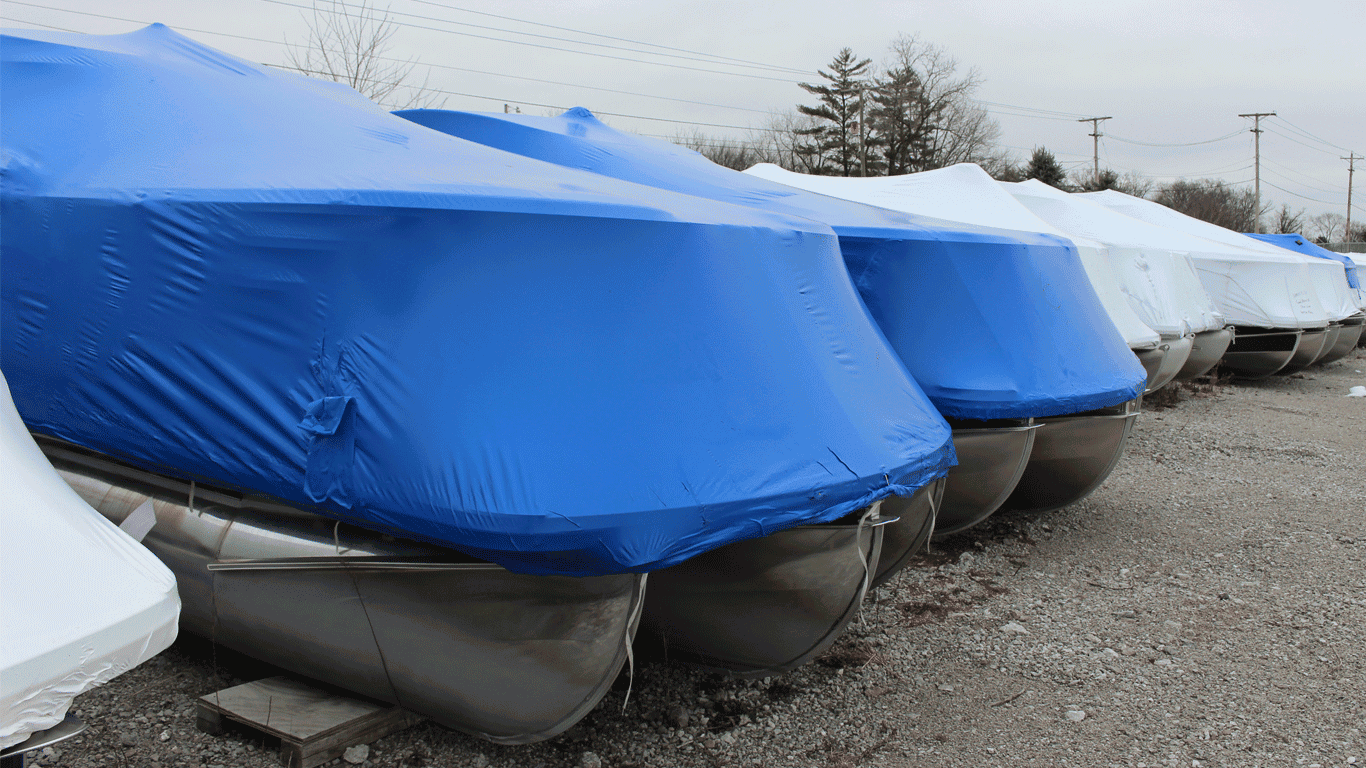
The best method for winter boat storage protection is to have your dealer shrink wrap it. A conventional fitted cover is fine for short periods of storage but to make sure critters don’t take up residence for the winter, shrink wrapping done by a professional is the way to go. Don’t forget to recycle the wrap in springtime.
Store it Properly
When storing a pontoon on a trailer, it’s a good idea to block the trailer, remove the tires and bag the hubs with stout plastic bags. This not only prevents flat spotting on the tires but also serves as a theft deterrent.
- If you keep the tires on, periodically move the trailer a foot or so every month.
- Never park a trailer under a tree because limbs can break off.
- Avoid parking on grass, which can rot the tires.
If you perform all these winterization steps correctly, you should be able to get right back on the water without delay when boating season arrives.
This website does not provide financial or legal advice. The information available on this website is provided for general informational and educational purposes only and is not a substitute for professional advice. You should consult with the appropriate professionals prior to making any financial decisions. YOUR USE OR RELIANCE ON ANY OF THE INFORMATION PROVIDED HEREIN IS SOLELY AT YOUR OWN RISK. UNDER NO CIRCUMSTANCE SHALL WE HAVE ANY LIABILITY TO YOU FOR ANY LOSS OR DAMAGE OF ANY KIND INCURRED AS A RESULT OF THE USE OR RELIANCE ON ANY INFORMATION PROVIDED.