


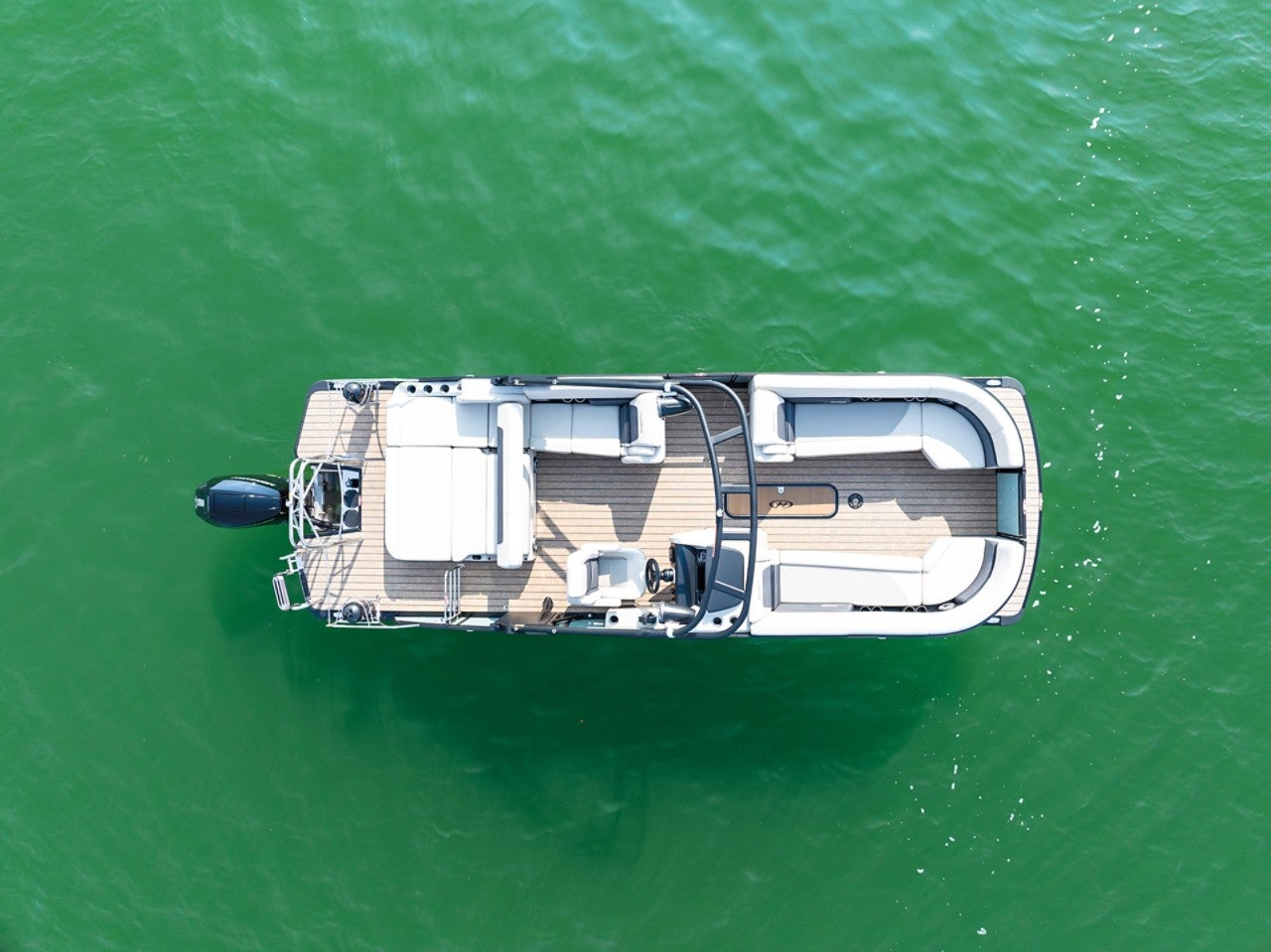
Pontoon Boat Flooring: Making the Ideal Choice
Pontoon boats offer a lot of options for prospective buyers, and flooring is no exception. It is important to choose a pontoon floor that looks great but also works best for the intended use of the boat. The most common options are:
- Plywood Flooring
- Carpet Flooring
- Vinyl Flooring
- Rubber Flooring
- PVC Flooring
- Paint Flooring
Each type of boat flooring has pros and cons to take into consideration. Below we spell out those advantages and disadvantages to help you make the best decision.
| Inexpensive | Durable | Stylish | Functional | Pet Friendly | |
| Plywood Flooring | ✅ | ✅ | |||
| Carpet Flooring | ✅ | ✅ | ✅ | ||
| Vinyl Flooring | ✅ | ✅ | ✅ | ✅ | |
| Woven Vinyl Flooring | ✅ | ✅ | ✅ | ✅ | |
| Rubber Flooring | ✅ | ✅ | |||
| PVC Flooring | ✅ | ✅ | ✅ | ||
| Paint Flooring | ✅ | ✅ |
Plywood Pontoon Boat Flooring
Pontoon boats traditionally use plywood for the deck. Harris specifically uses marine-grade plywood with a tongue and groove fit to ensure a watertight finish. While plywood works well for deck construction, it is not inherently the best option for a floor. It’s not easy to clean, requires a lot of maintenance, and is generally not aesthetically pleasing.
Carpet Pontoon Boat Flooring
In the past, carpet has been a popular choice for pontoon flooring for several reasons. Carpet is comfortable to walk on and you can find it in almost any color or style. It’s also cost effective to buy in large quantities and easy to cut and install for a variety of boat sizes and shapes. However, carpet is prone to stains and can be difficult to clean. Pontoons are used on water, making the carpet prone to mildew if not cared for properly.
Vinyl, Woven Vinyl Pontoon Boat Flooring
A popular alternative to carpet is vinyl. Like carpet, vinyl is easy to install and comes in a variety of styles. Unlike carpet, vinyl boat flooring is easy to clean, and won’t fade with prolonged exposure to the sun. One drawback to vinyl is that high temperatures can cause the floor to get warm. Woven vinyl offers the same easy-to-clean surface that feels comfortable under your feet while adding even more stylish options with a textured finish. The wide color and pattern selections available make vinyl an attractive, practical option for pontoon-boat flooring.
Rubber, PVC, Paint Pontoon Boat Flooring
While not typically used in boat manufacturing, there are several options for boat and pontoon flooring that are popular among do-it-yourselfers. Some boat owners prefer to use a rubber floor. While it is not attractive, it is durable. Rubber flooring can also be a good option for people looking to relieve stress on their feet, knees and back. Some rubber flooring includes foam and gel that helps prevent the discomfort of extended standing. However, rubber flooring does get hot. It is also not UV resistant, so it’s likely to fade.
Polyvinyl chloride floor tiles are easy to install and clean but are generally cost prohibitive.
Another popular do-it-yourself option is marine paint. These paints are easy to apply and are cost effective. A big downside is that surface prep is important and can be challenging, however, when it’s finished it makes a nice non-skid surface for your boat.
The Harris Way
Harris pontoon boats use a variety of vinyl flooring options. With wood-like styles and woven patterns available, vinyl offers the best overall value for construction, appearance and maintenance. Paired with a foam back, Harris vinyl pontoon flooring feels comfortable so you can enjoy your time on the water.
This is for general information purposes only. Your use or reliance on any of the information in this Blog is solely at your own risk. Under no circumstance will we have any liability for any loss or damage of any kind incurred as a result of the use of any of the information provided.
Options and features mentioned subject to change. Please confirm availability of all accessories and equipment with an authorized Harris Dealer.